

xchange
Meetings as Transformation Platform

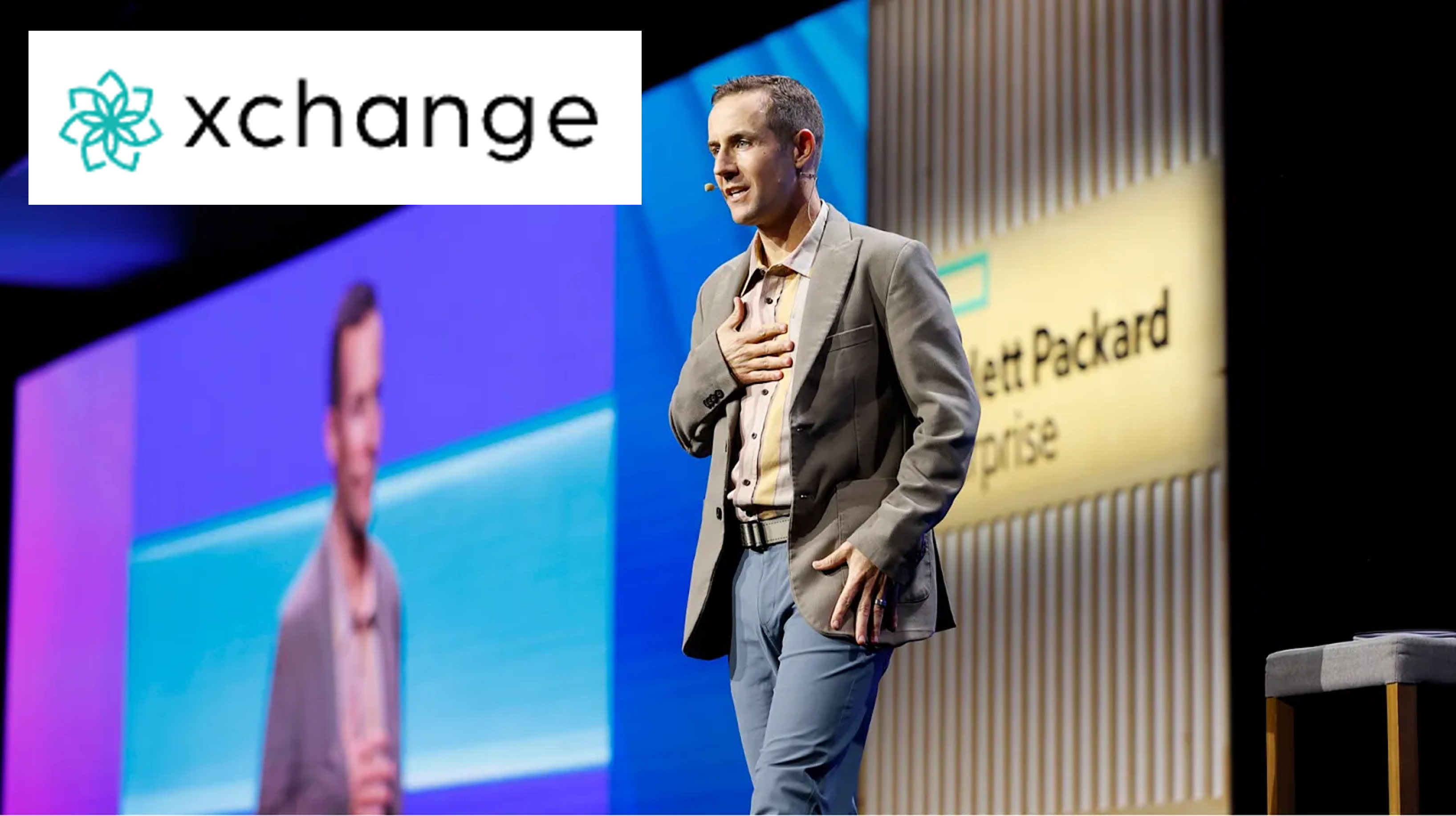
Three weeks ago I published a list of upcoming public events in which you could join. Let me add another one: The Transformation Economy: Moving Beyond Experiences To Create Lasting Change with coaching transformation platform xchange. This will be on Thursday, April 9, from 11am-12:30pm EDT (17.00-18.30 CET), and anyone can join by registering in advance here:
http://xchangeapproach.com/TransformationEconomy
I’m very excited about this virtual conversation (everyone has a chance to talk and contribute!) because xchange is a terrific exemplar of the Transformation Economy, where meetings become platforms for genuine change rather than containers for content delivery. If in particular you are a coach, facilitator, or leader who designs transformative experiences – a transformation guider, in other words! – you’ll find this upcoming event valuable.
A Pioneer in the Transformation Economy
Always on the lookout for new (to me) exemplars, I discovered decade-old xchange in November 2025. It designs and facilitates meetings intended not merely to inform participants, but to change them. Its work has included internal leadership summits for firms such as BMW, Facebook, HP, and Google, along with conferences for organizations such as Conscious Capitalism, HeartMath, Women Presidents Organization, and Arthur Page Society. Through its training it now has thousands of Certified xchange Guides that know and use its methodology.
xchange recognizes that the old way most meetings, trainings, and conferences still operate is no longer enough. You know the routine: Put chairs in rows. Face them toward a stage. Have a small number of experts speak while everyone else listens. Transfer information, hopefully make it engaging, and pray people leave with a few useful ideas.
The old way meetings, trainings, and conferences operate is no longer enough
As Jon Berghoff, founder of xchange, told me:
That model made sense when information was scarce and expertise was hard to access. But in a world awash in content, information itself has become increasingly commoditized. Under those conditions, the opportunity is no longer simply to deliver insight. It is to guide aspiration.
Exactly! Rather than treating meetings as vehicles for content consumption, this company considers them platforms for connection, creation, and change. (See pp. 115-120 of the book.) The movement shifts from presenting to participants toward engaging them, from presenting ideas toward generating them, and from centering the stage toward centering the room.
When Jon and I first met, he shared how xchange sees itself as supporting a cycle of four transformations.
Transforming the Meeting
First is transforming the meeting itself.
xchange developed a platform, or operating system, for designing and leading large-group gatherings around human connection rather than passive reception. Many organizations still treat gathering design as a logistical exercise: build the agenda, sequence the speakers, manage time well, and trust that engagement will emerge. But transformational meetings require changing how they flow and operate.
xchange is a transformation platform
Here’s how Jon described on such example:
Consider Hewlett Packard, which brought together 500 leaders for an annual summit. The company wanted to deepen participants’ connection to mission, help them learn from one another, and move them toward bold action. A conventional approach would have attempted to accomplish those goals largely through presentations from the stage.
Instead, xchange designed the summit so that key presentations were interspersed with structured conversations across the entire room. Participants reflected on stories that surfaced shared purpose, exchanged lessons around execution, and made commitments to action. Every participant engaged. More than twenty times, leaders took the microphone to bring their conversations into the larger room, unscripted and in real time. The room became the stage. The participants became the presenters. And the connective tissue of the leadership culture was strengthened in the act of gathering itself.
That is a useful distinction: a meeting need not be a “container for content delivery” but “the medium through which aspiration is activated”, as Jon puts it.
Transform the Participants
The second transformation is the transformation of participants.
The xchange methodology, as Jon outlines it, centers on “intentionally designed questions, collaborative sense-making, conversational processes that invite contribution rather than spectatorship, and structured reflection” – no surprise, given the importance of reflection for turning experiences into transformations I posted on last week! Via xchange, the room itself shifts from being a venue to a chrysalis.
Being such a chrysalis recognizes that people come to gatherings not only for information but for transformation – or at least progress on the transformation journey they’re already on, the aspirations with which they arrive. Some want greater clarity. Some want courage. Some want belonging. Some want higher levels of capability. Some want to become better leaders, better collaborators, or more fully themselves.
Being a chrysalis recognizes that people desire not only information but transformation
xchange recognizes that such people aren’t mere attendees or event participants, but aspirants. Jon shows how this plays out through another example:
One can see this dynamic in a summit we helped design for Facebook, where forty behavioral scientists and forty company insiders came together with a shared aspiration — to understand how technology was affecting human behavior and what could be done about it. The conditions were also ripe for division, distrust, and competing agendas.
Rather than opening the gathering by telling participants how to work well together, xchange asked them. It broke the room into teams and invited people to co-create the principles by which they would work together. By noon on the first day, Dr. Dan Reidenberg, a world-renowned expert in suicide prevention, remarked to me, “I have never seen a group work so well together under conditions where the potential for distrust was so high. This entire process is like nothing I’ve ever experienced, in how it transformed the way the entire room showed up, and worked together.” Over two days, the participants were able to solve major problems and design solutions that reportedly made their way onto the platform within a few months.
What changed was not merely the quality of the conversation the relationship participants had to one another and to the work before them. They became co-creators of the conditions under which progress could occur, helping them achieve their core aspirations for the work that had brought them into the room together.
Transforming those on Stage
The third transformation may be the hardest of all: the transformation of hosts, leaders, planners, experts, and anyone else on stage.
The dominant image of value in conferences, leadership development, and education has long been the expert at the front of the room – the one who knows, who tells what he knows, and who delivers answers to everyone else. But if transformation is the goal, that identity can become a hindrance.
xchange invites identity shifts
This is where xchange does more than offer facilitation techniques. It invites an identity shift in leaders, speakers, educators, conveners, etc. The point is not to abandon expertise, but to deploy it differently: not as the centerpiece of a broadcast, but as the architecture behind a transformative experience in which others can learn, contribute, reflect, and change. One example:
One can see the commercial power of this shift in xchange’s work with Dr. Benjamin Hardy and Blake Erickson’s Scaling.com. When The Science of Scaling gave rise to a membership model for entrepreneurs being coached to scale their companies, the first large member event could easily have followed a conventional formula: experts teaching from the front. Instead, Hardy and Erickson were willing to try something different — devoting roughly half the time to peers learning from one another through the xchange approach. On the final day, participants gave the conference a Net Promoter Score of 91, an extraordinary figure for any event, let alone one in the conference industry. Participants reportedly credited the interactive design as central to unlocking creativity and helping them make bold decisions about the future of their businesses. The next member conference is expected to draw more than 400 attendees, up from 87 at the first event, with the xchange approach again at the heart of the experience.
You can see what Dr. Hardy thought of the results of the event on his LinkedIn post here.
This identity shift matters more than it might first appear. In many industries, expertise alone no longer commands the premium it once did. Information is widely available. Answers are cheap. What remains rare is the ability to design and guide conditions under which people make meaning, deepen trust, generate insight, and commit to change.
Transforming the Transformation Guider
When the host transforms, the meeting transforms. When the meeting transforms, participants can transform. And when those three transformations reinforce one another, a fourth becomes possible: the transformation of the guider’s own work.
Since 2020, xchange has been certifying consultants, coaches, leaders, and community builders in its methodology. In doing so, it is helping them reposition themselves with a higher level of economic value, shifting from expertise delivered to aspirations achieved. Aspirants invest their time under a guide’s direction, and the economic promise of transformation lies in helping them become a new version of themselves over time, in shifting meetings from merely time well spent to time well invested. As Jon related:
Tina Parker’s story offers a practical example. A retired Air Force Lieutenant Colonel, she transitioned into leadership development and found herself increasingly uncomfortable with the expectation that she needed to hold and deliver all the expertise in the room. After finding xchange and becoming certified, she shifted her workshops toward a much richer mixture of peer learning and expert guidance. She still shows up with authority and presence, but now more as a host and guide than as a sole source of answers. By her own account, the change paid for itself many times over within a year, generating clients and revenue that exceeded ten times her original investment in certification. Hers is one example of what may be the most commercially significant transformation xchange enables: not just transforming meetings and participants, but transforming the career possibilities of those who learn to guide in this way.
You can see how xchange is not merely a facilitation or training company. It is an exemplar of what becomes possible when an enterprise recognizes that meetings can become experiences, experiences can become transformation platforms, and transformation platforms can become the basis for new forms of value creation.
How can you go beyond information transfer to transformation guiding?
The broader lesson is thinking about the meetings you go to. If you’re a host, how can you help them go beyond information transfer to transformation guiding? Or if you have influence on the agenda, structure, and delivery, how can you refocus it on the people who come to it and their aspirations? Or even if you are merely an attendee – and even if the organizers have no understanding of transformation – how can you be aware of the transformation journey you (and colleagues, if appropriate) are on, and devise ways for the meeting to help move you along on that journey? In these ways meetings can be places where aspirations are surfaced, identities are reshaped, and real change occurs.
When that happens, meetings become platforms for transformation.
Meeting Transformation Exemplified
If what you’ve read here raised questions you’d like to explore further, please do join Jon and me for a live conversation at The Transformation Economy: Moving Beyond Experiences To Create Lasting Change. Again, it’s on Thursday, April 9, from 11am-12:30pm EDT (17.00-18.30 CET).
This won’t be a presentation. It will be exactly the kind of gathering described here — one where your questions and perspectives are part of what we’re building together. You can register here:
http://xchangeapproach.com/TransformationEconomy
Joe
© 2026 B. Joseph Pine II
Excellent merging of the brilliance of Joe Pine, author, and Jon Berghoff with xchange. Love the call out of the 4 aspects of transformation. The xchange Approach is a game changer and impact creator. Looking forward to the interview April 9.
Robin L Graham, Results Catalyst with PSYCH-K® and xchange Certified Guide
I first heard this expression from Jon Bergoff - "Transformation does not happen directly from the event, the experience, the learning, etc. Rather transformation insight comes from making space and taking time to "reflect" on the event, experience, learning." As a participant in many xchange events I have lived this insight first hand. The xchange approach builds and creates space for this reflection inside of the event container itself. Looking forward to April 9th. Steve